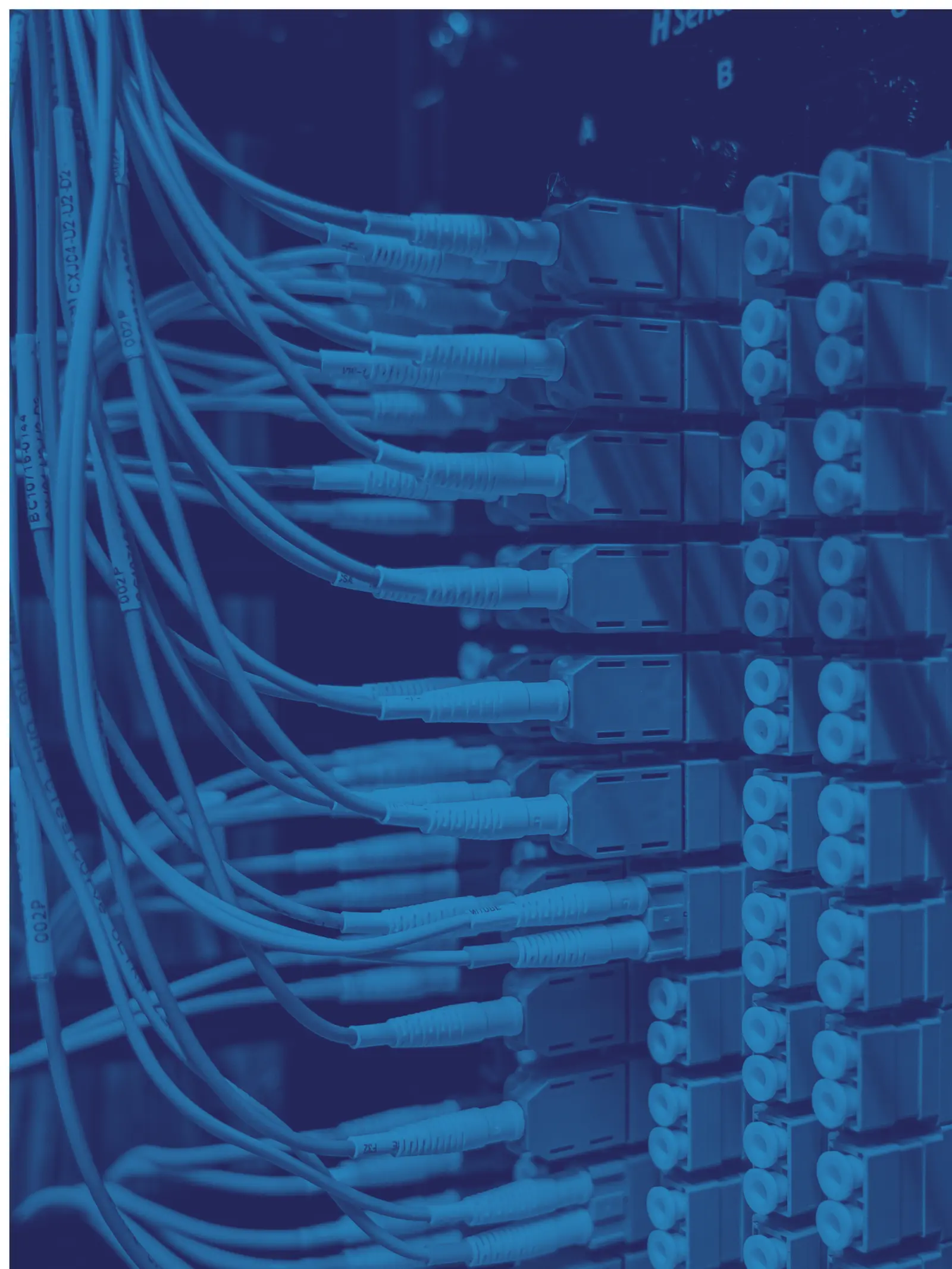
Outdoor Mobile Server Rack Cabinets: Engineering Considerations for Mobility, Environmental Protection, and Thermal Management
Learn the engineering considerations behind outdoor mobile server rack cabinets, including caster selection, tipping stability, thermal management, vibration, sealing integrity, and cable management.
Most server rack cabinet discussions focus on static installations inside controlled environments. Outdoor mobile rack systems introduce an entirely different set of engineering challenges.
Once a cabinet moves, the enclosure system experiences vibration, dynamic loading, tipping forces, shifting center of gravity, cable strain, repeated mechanical stress, and changing thermal conditions.
These factors fundamentally change how outdoor mobile server rack cabinets are designed, deployed, and maintained compared to stationary rack systems.
Mobile racks experience dynamic loading that static cabinets never see
Outdoor surfaces dramatically affect caster performance and stability
Vibration from movement directly impacts sealing systems over time
Cable strain relief requirements change when the enclosure moves
Thermal management must account for solar loading and changing placement conditions
Leveling and re-stabilization matter after every repositioning event
Caster Selection Is a Primary Engineering Decision
Caster selection is one of the most important engineering decisions in a mobile outdoor rack system, yet most discussions reduce it to wheel size alone.
In reality, caster performance affects:
mobility
vibration transfer
tipping stability
long-term enclosure reliability
A caster system that performs adequately indoors may fail quickly outdoors when exposed to:
Caster Design Considerations
Design Factor | Engineering Impact |
Load rating | Structural safety margin |
Wheel diameter | Obstacle clearance and vibration reduction |
Wheel material | Surface compatibility and vibration transfer |
Swivel vs fixed configuration | Steering stability |
Locking system | Grade-holding capability |
Corrosion resistance | Outdoor service life |
Static and Dynamic Load Ratings Are Not the Same
One of the biggest mistakes in mobile rack design is assuming static and dynamic load ratings are equivalent. They are not.
A rack that safely supports equipment while stationary may experience very different loading conditions while moving across thresholds, concrete joints, slopes, and rough outdoor surfaces. Every movement event introduces impact loading and vibration impulses that do not exist in stationary systems.
Dynamic loading can create:
shifting center of gravity
uneven wheel loading
frame stress concentration
increased tipping tendency
Static vs Dynamic Caster Loading
Condition | Typical Load Capacity |
Static stationary load | 100% rated capacity |
Smooth rolling movement | ~60–75% effective capacity |
Rough outdoor surfaces | Often lower than 60% |
Grade transitions | Increased localized loading |
This is why a rack with four 500 lb casters does not automatically mean a safe 2,000 lb mobile system under real-world outdoor conditions.
Wheel Diameter Affects Outdoor Mobility
Small caster wheels that work well on raised floors or smooth concrete often perform poorly outdoors.
Wheel diameter directly affects:
Small-diameter wheels tend to catch expansion joints, transfer higher vibration into the enclosure frame, and struggle with rough terrain. Larger wheels distribute load more effectively and navigate surface transitions more smoothly.
A simplified obstacle-clearance estimate is:
dmin ≈ 2h
Where:
dmin = minimum wheel diameter (inches)
h = obstacle height (inches)
Wheel Diameter and Surface Compatibility
Wheel Diameter | Typical Environment |
2–3 inch | Indoor data center floors |
4–5 inch | Outdoor concrete and light industrial use |
6 inch+ | Rough terrain and uneven outdoor surfaces |
Even relatively small thresholds can create major movement resistance and vibration transfer problems in loaded rack systems.
Wheel Material Changes Vibration Behavior
Wheel material selection affects much more than traction alone.
Different wheel materials change how vibration energy transfers into the enclosure system. This directly affects:
mounted equipment
fastener retention
long-term structural fatigue
Common Outdoor Wheel Materials
Wheel Material | Typical Use | Engineering Consideration |
Polyurethane | Smooth concrete | Lower rolling resistance but higher vibration transfer |
Rubber | Wet or uneven surfaces | Better shock absorption |
Pneumatic | Rough terrain | Maximum cushioning but higher maintenance |
Steel | Heavy industrial loads | High durability but severe vibration transmission |
Outdoor systems often prioritize terrain compatibility and vibration reduction over low rolling resistance.
Swivel Configuration Affects Stability
Caster layout directly affects directional control and tipping behavior.
Many mobile racks use two fixed rear casters and two swivel front casters because the configuration improves maneuverability during transport. However, outdoor movement introduces forces that do not exist on flat indoor floors.
On grades or uneven surfaces, swivel casters may:
rotate unexpectedly
shift load distribution
create steering instability
increase lateral movement during turning
These effects become more severe as:
rack height increases
equipment density increases
center of gravity rises
A tall outdoor mobile rack carrying heavy networking or server equipment can become surprisingly unstable if caster geometry is not evaluated during the design phase.
Tipping Stability Changes on Grades
Outdoor environments introduce ramps, curb transitions, drainage slopes, and uneven terrain that change how the rack behaves under load.
As the rack moves onto a grade, the effective center of gravity shifts forward. This reduces tipping margin and increases loading on the front caster assemblies.
Tipping behavior is commonly estimated using:
Mtip = W × d
Where:
Mtip = tipping moment (lb·in)
W = loaded system weight (lbs)
d = horizontal distance from tipping edge to center of gravity (inches)
Conditions That Increase Tipping Risk
Condition | Stability Impact |
High-mounted equipment | Raises center of gravity |
Uneven terrain | Uneven wheel loading |
Sharp turning | Lateral load shift |
Grades and ramps | Forward tipping tendency |
Sudden stops | Dynamic forward loading |
Outdoor mobile racks carrying dense equipment loads should be evaluated for tipping behavior before deployment, especially when movement occurs across grades or uneven surfaces.
Locking Systems Must Match Real Conditions
Caster brakes that perform adequately indoors may fail outdoors.
Outdoor braking systems must resist:
Slope loading
Uneven surfaces
A brake system that prevents movement on flat indoor floors may not safely restrain a fully loaded rack on a 3-5% outdoor grade.
Locking System Considerations
Condition | Potential Issue |
Wet surfaces | Reduced braking friction |
Outdoor grades | Uncontrolled movement |
Corroded brake hardware | Brake seizure or failure |
Uneven terrain | Partial wheel unloading |
Vibration exposure | Gradual brake loosening |
Outdoor caster systems also require corrosion-resistant bearings, locking hardware, wheel frames, and fasteners. Indoor caster systems often seize or corrode rapidly when exposed to outdoor environments.
Movement Affects Sealing Integrity Over Time
Every movement event transfers vibration into the enclosure structure.
Concrete joints, ramps, thresholds, and uneven terrain create repeated vibration impulses that travel through:
Over time, movement may gradually affect:
Gasket compression consistency
Latch alignment
Fastener retention
Cable gland compression
Sealing pressure
Repeated movement and vibration can gradually reduce fastener preload consistency if torque is not periodically verified.
For the full torque formula and nut factor breakdown, see Submersible Enclosure Gasket Inspection and Replacement Guide.
Vibration-Related Sealing Risks
Vibration Effect | Long-Term Consequence |
Fastener loosening | Reduced sealing pressure |
Gasket relaxation | Moisture ingress risk |
Latch movement | Door alignment changes |
Cable entry movement | Compression inconsistency |
Frame vibration | Seal interface fatigue |
This is one reason mobile outdoor systems require different maintenance considerations than stationary enclosure systems.
Cable Management Requirements Change When the Rack Moves
Cable management for mobile racks is fundamentally different than static systems.
Movement introduces repeated flex cycles, cable strain, bend-radius changes, and shifting pull loads that do not exist in stationary installations.
Every cable entry should account for:
flexible movement
repeated repositioning
service loops
strain relief
bend-radius protection
Mobile Cable Management Considerations
Design Requirement | Purpose |
Flexible conduit | Reduces movement stress |
Service loops | Allows controlled movement |
Strain relief systems | Protects entry interfaces |
Bend-radius management | Prevents cable fatigue |
Movement clearance | Prevents cable snagging |
Cable failures in mobile systems often develop gradually after repeated movement cycles rather than during initial installation.
Thermal Management Changes Outdoors
Thermal conditions become less predictable once server cabinets operate outdoors.
Placement conditions may change due to:
airflow restriction
surrounding structures
temporary staging locations
movement between shaded and exposed areas
Internal heat load must be evaluated alongside these changing placement conditions.
For the full heat load calculation methodology, see Electrical Enclosure Cooling: Free BTU Calculations.
Outdoor mobile systems may experience rapidly changing thermal conditions depending on deployment location and environmental exposure.
Outdoor Thermal Factors
Condition | Thermal Impact |
Direct sunlight | Increased internal temperature |
Restricted airflow | Reduced cooling efficiency |
Asphalt placement | Increased radiant heat |
Temporary staging | Variable ambient conditions |
Equipment density | Higher heat concentration |
For detailed cooling guidance, see Air Conditioned Network Racks for Outdoor Applications.
Re-Leveling Matters After Movement
Every repositioning event changes how the rack sits on the surface below it.
Outdoor surfaces rarely remain perfectly level, and even small differences in wheel position can affect:
This is why many outdoor mobile systems require:
leveling feet
adjustable caster stems
stabilization supports
Re-Leveling Considerations
Alignment Issue | Potential Consequence |
Uneven wheel loading | Frame twist |
Door misalignment | Reduced sealing consistency |
Improper leveling | Drainage problems |
Rack lean | Increased tipping risk |
Structural preload changes | Fastener stress redistribution |
Movement is not simply a transportation issue. It directly affects enclosure geometry, sealing behavior, and long-term structural stability.
How NEMACO™ Can Help
NEMACO™ engineers enclosure systems for demanding environments where mobility, environmental exposure, structural stability, and long-term reliability all matter.
Our team can help evaluate:
caster system requirements
outdoor environmental exposure
vibration effects
tipping stability
sealing system performance
NEMACO™ enclosures are engineered to perform under combined environmental stress, not isolated test conditions, and are backed by a 5 to 15-year warranty depending on configuration, providing added confidence in long-term durability and performance for demanding environments.
Frequently Asked Questions
Do static caster load ratings apply to mobile outdoor server racks?
No. A caster's static load rating assumes a stationary load on a flat surface. Once the rack moves across outdoor terrain, effective load capacity typically drops to 60-75% of the static rating on smooth surfaces, and can fall below 60% on rough terrain or grade transitions.
What caster wheel diameter is recommended for outdoor mobile server racks?
Wheel diameter should match the deployment surface: 2-3 inch wheels are suited to indoor data center floors, 4-5 inch wheels for outdoor concrete and light industrial use, and 6 inch or larger wheels for rough terrain and uneven outdoor surfaces.
Does movement affect the environmental sealing of a mobile server rack cabinet?
Yes. Vibration from repeated movement can gradually affect gasket compression, latch alignment, fastener retention, and cable gland compression, all of which contribute to sealing performance over time.
Why does tipping risk increase on grades and ramps?
Moving onto a grade shifts the effective center of gravity forward, reducing the tipping margin and increasing load on the front casters. This effect is amplified by taller racks, higher equipment density, and sudden stops.
Do indoor caster locking systems work in outdoor environments?
Not reliably. Outdoor braking systems must resist slope loading, vibration, wet surfaces, and corrosion, conditions an indoor-rated brake system isn't designed to withstand. A brake that holds on a flat indoor floor may not restrain a fully loaded rack on a 3-5% outdoor grade.
Why does cable management differ for mobile versus stationary server rack cabinets?
Mobile racks introduce repeated flex cycles, cable strain, and shifting pull loads that stationary installations never experience, requiring flexible conduit, service loops, strain relief, and bend-radius protection at every cable entry.
Related Resources
- Outdoor IT Rack Cabinet Cooling | Methods, Heat Load, and Environmental Control
- How Server Rack Cabinets Prevent Failure | Airflow, Thermal Control, and System Protection
- Electrical Enclosure Cooling: Free BTU Calculations
- When to Use Floor-Mounted Server Rack Cabinets
- Outdoor Electrical Enclosures & Server Cabinets: Heating, Cooling, and Environmental Protection Design Guide
Holly Sanders
Technical Writer
The information provided in this article is for general reference only. While we strive for accuracy, standards and certifications are subject to change. Always consult the official documentation or speak with a certified engineer to verify requirements for your specific application.